Speakers
 Tracks
 Future of SportsTech Report
 Executive Summit
 Startup World Cup 2027
 Official Hotel
 2026 Photos
 Who Attended
 FAQs
Sports Streaming Churn in 2027: Why Live Games Aren’t Enough
 Peak Conference
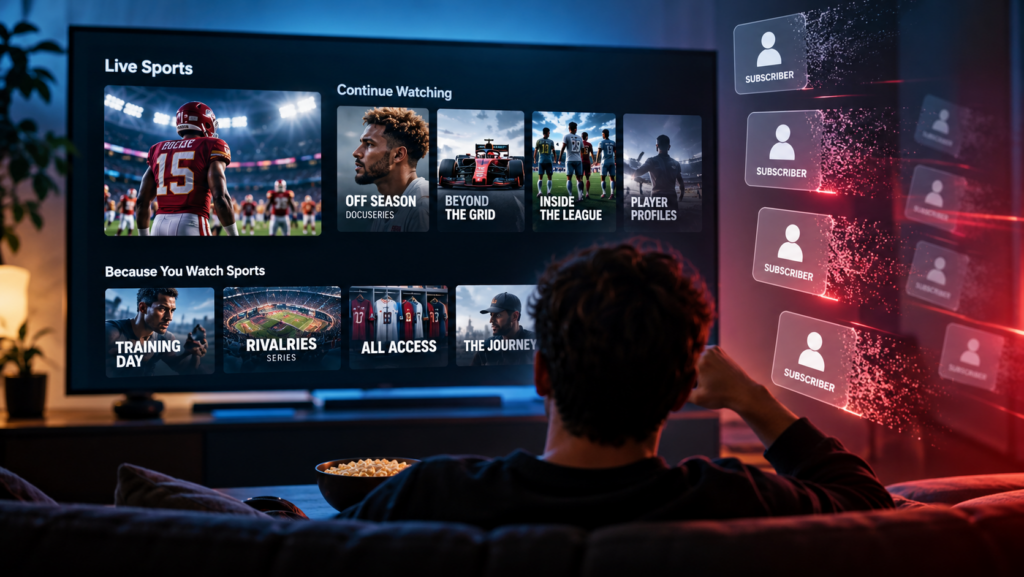
Sports streaming churn is now one of the most expensive problems in media. Major global streamers lost an estimated $6.3 billion to churn in 2025, according to Parrot Analytics. That figure covers all content, not only sports. Live sports was supposed to be the fix. The data says it’s only half of one.
“Churn is our worst enemy,” said Doug Finberg, Partnership Executive at Parrot Analytics, on the PEAKCONF stage. Three PEAKCONF sessions, from Parrot Analytics, the Bundesliga, and Kings League, approach the problem from different angles. Together they suggest that keeping a sports fan engaged takes more than the game itself.
What is sports streaming churn and how can providers reduce it?
Sports streaming churn is the rate at which subscribers cancel a streaming service. It hits sports hard because live events end. A fan can sign up for one game, one tournament, or one season. When it finishes, so can the subscription.
Three approaches are emerging to keep fans engaged beyond the live event, each highlighted in a different PEAKCONF session:
- Shoulder content: programming around the live event, such as docuseries and off-season shows, that keeps fans engaged between games (Parrot Analytics)
- A funnel before the paywall: free, linear, and social entry points that lead fans into a paid product over time (Bundesliga)
- Creator-led distribution: building the audience relationship through creators instead of renting it from a broadcaster (Kings League)
Shoulder content directly addresses subscriber retention. Broader distribution and creator-led communities work earlier in the relationship. They help leagues build the audience ties that make long-term loyalty possible.
The numbers shaping sports streaming in 2027
$6.3B
Estimated lost to churn across major global streamers in 2025 (all content), per Parrot Analytics
1.25M
Estimated subscribers WWE retained each quarter of 2025, per Parrot Analytics
~500K
Estimated subscribers retained per quarter by Netflix’s NFL off-season shows, per Parrot Analytics
10%
Pay TV penetration in Brazil, per Bundesliga’s Robin Austermann
Case study: why live sports alone won’t stop streaming churn
Parrot Analytics tracks how audiences engage with content. Finberg said it measures more than 2 billion audience engagements every day. He said the resulting demand metric tracks revenue closely, with a correlation of 0.88 that Parrot had independently verified.
That data points to a clear pattern. Live events create attention spikes, while programming between games can give subscribers more reasons to stay.
A single game is a blip
Live events create spikes. Finberg’s point was that a spike is not a habit. “Single days have an impact, as we’ve demonstrated,” he said. “But just like a film, they’re a blip in time. They’re a single moment.”
The cost of chasing those moments is steep. Streamers are paying for year-long global rights worth upwards of $5 billion, Finberg said. One-off games can run around $110 million.
WWE and the 52-week habit loop
WWE is the counterexample. Finberg called it a 52-week sport. He said its Netflix run delivers appointment viewing, social gravity, and habit loops across the entire year.
Parrot estimates that WWE retained 1.25 million subscribers every quarter of 2025, Finberg said.
Shoulder content fills the gaps between games
The NFL has an off-season, so Netflix filled it. Finberg showed that off-season NFL shows drew just over 120 million hours viewed in the second half of 2025. Parrot estimates those shows retain roughly 500,000 subscribers a quarter and generate about $100 million in global streaming revenue.
Formula One shows the same idea across platforms. Netflix’s Drive to Survive brings casual viewers into the sport. Apple released F1: The Movie and announced exclusive U.S. rights to the races. Finberg presented these as parts of one F1 content ecosystem, though they sit on different platforms. He said a show like Drive to Survive keeps about half a million subscribers paying each quarter.
His takeaway was direct. “Shoulder content at the end of the day is really what the message is here,” he said. “Because it maintains that engagement and it elevates the overall performance of a franchise.”
What this means for smaller leagues
An audience member asked what the WNBA could do with the same idea. Finberg’s answer was practical. “Those can be player profiles. They can be workout routines,” he said. He also suggested “a four part docu series about the league.”
How leagues build loyal audiences before asking fans to subscribe
The next two sessions are less about keeping subscribers and more about earning them. Reducing churn starts before the subscription is purchased, because fans with stronger ongoing relationships may have more reasons to stay. Both sessions showed how leagues can build stronger audience relationships before asking fans to pay. Whether those relationships reduce cancellations is the next question to test.
Bundesliga: free and linear entry points into a paid product
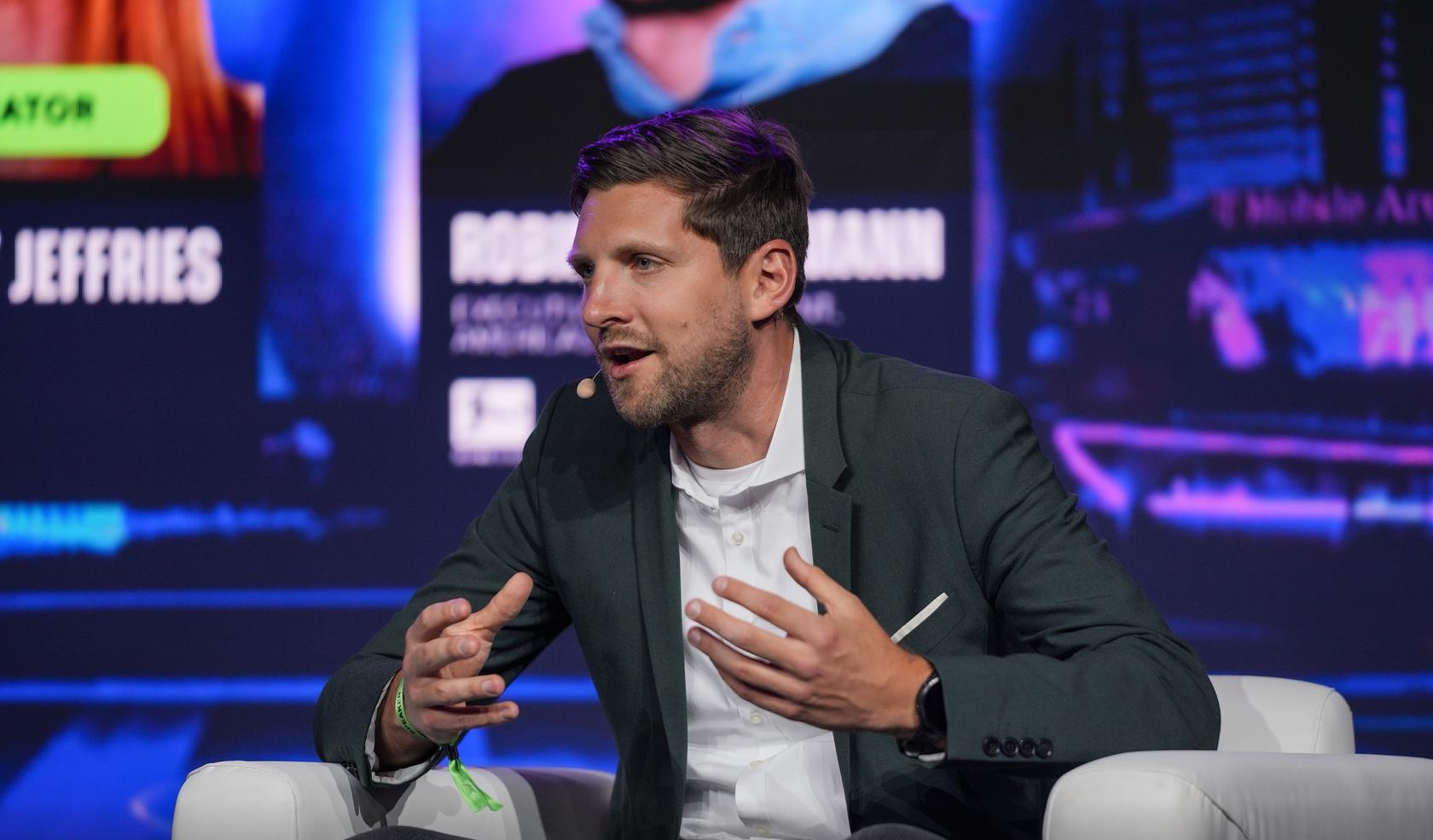
Robin Austermann, Executive Vice President, Americas at the Bundesliga, said the league treats every market differently. In Brazil, pay TV reaches only 10% of the population. A pay-TV-only deal there would mean the league “would lose 90% of the population,” he said. So the Bundesliga partners with six broadcasters.
The U.S. works differently. The league partners with ESPN alone, but ESPN carries matches across ESPN+, its linear channels, and ESPN FC on YouTube. Awareness comes first. “In a market like the US we need to really work on the overall awareness first,” Austermann said.
One format, Discover Club, sends two creators, one from Mexico and one from the U.S., to Germany. They follow a single club and tell its story from an American perspective. The league also recently launched a U.S.-focused podcast, Bundesliga House.
Austermann was candid about where the money sits. The live media model still works, but “it’s not a stable revenue driver.” An ESPN deal is “the last step of the funnel.” By then, fans who subscribe because of the Bundesliga have already converted. A league’s direct-to-consumer offer, he said, “should always work as a complement” to its broadcast partners.
He also expects fragmentation to give way to aggregation. Few fans will subscribe to ten separate pay TV models.
Bundesliga: personalizing the broadcast itself
The league is also testing how the stream can adapt to each fan. Austermann described an interactive feed that already exists inside a broadcast partner’s streaming product. Five matches play in parallel on Saturdays. Viewers pick one to watch in full and see only the goals from the rest.
AI-generated highlights go a step further. A U.S. fan might want the goals scored by Malik Tillman for Bayer Leverkusen, Austermann said. “Whereas in Vietnam nobody really cares about a goal for Malik Tillman.” The next step he described is personalized advertising inside the same feed.
Kings League: building fan loyalty without relying on subscriptions
Traditional streamers focus on retaining paying subscribers. Kings League approaches the problem differently. Its creator-led model builds recurring audience engagement without requiring every fan relationship to begin behind a paywall.
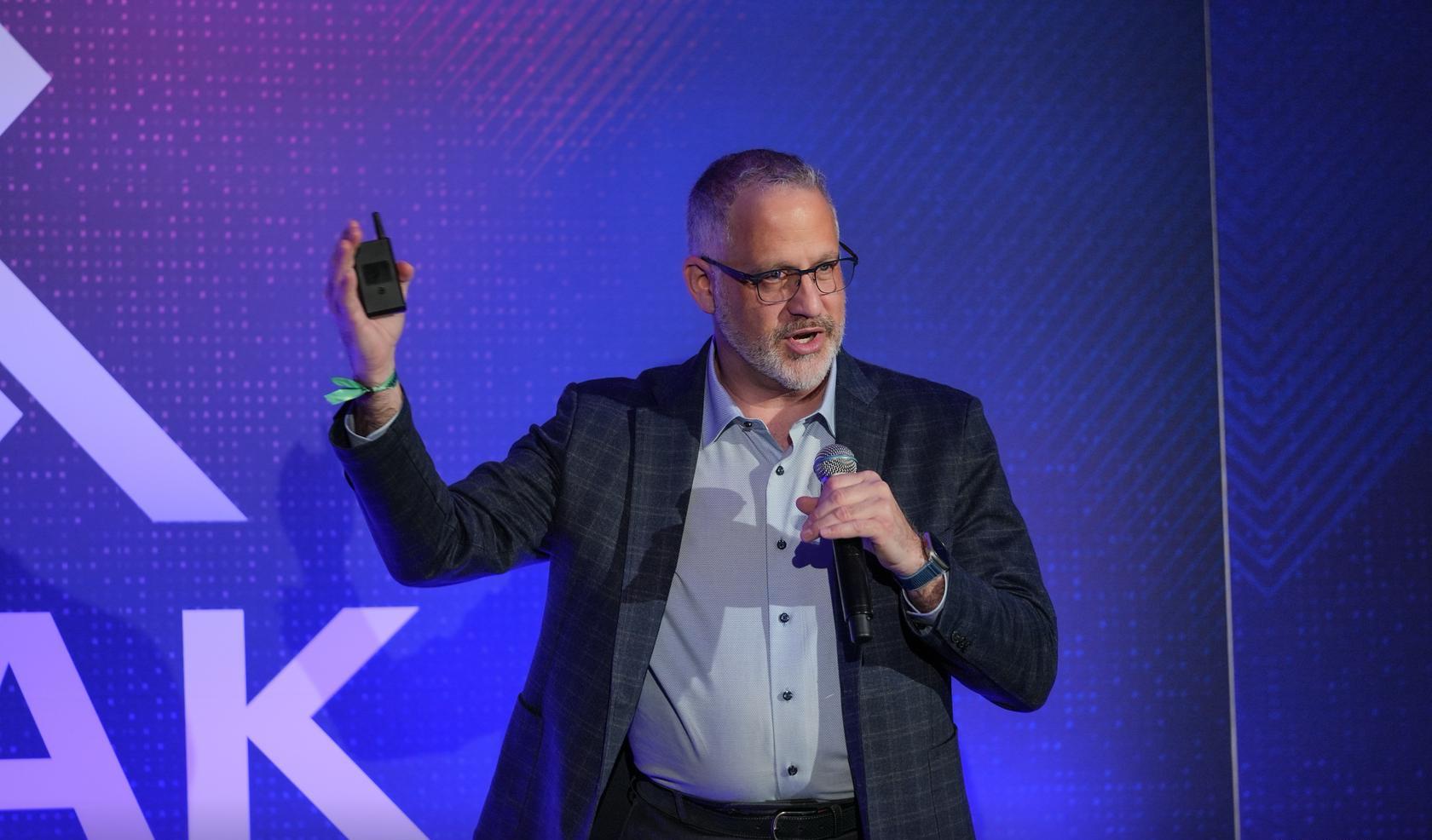
David Muoser, Managing Director US at Kings League, described a creator-led soccer league founded by Gerard Piqué. It runs nine leagues in seven countries, none of them English-speaking yet. The U.S. launch is next.
Matches stream on Twitch, YouTube, and TikTok, and each team’s president streams matches on their own channels. The model drew 90,000 fans to Camp Nou and more than 15 million Twitch views for its first-season final in 2023.
Using creators who already have vast audiences “was a way for us to build fandom, build community, and build reach from day one,” Muoser said. Traditional media distribution could not have delivered that.
The trade-off was media rights. “We don’t have that inherent chain of media rights deals that we’re tied to from the start,” Muoser said. What the league gained was “a reach and scale that is incredibly monetizable from a sponsor and a partner perspective.”
Creators are also the owners of the teams. “They are the main characters, and the distributors of our products and our story,” he said. The audience helps shape the product too. “We asked the community what color should the pitch be,” Muoser said. “And they said, black.”
Kings League: turning underdog players into stars
The creator model builds players as well as audiences. Muoser pointed to Kelvin Oliveira of Kings League Brazil, who was MVP of the 2025 Kings World Cup Nations. Oliveira gained 750,000 Instagram followers in the 48 hours after the event, Muoser said. He went on to sign brand deals and earn a tryout with Santos.
Muoser also said a Queens League Spain goal drew over 400 million views on the league’s own channels. “That’s the type of platform that we’re giving to these underdog players,” he said.
What the three models have in common
Taken together, the three sessions show different tools for the same job. Parrot’s data shows shoulder content keeping subscribers between games. The Bundesliga builds audiences through free entry points before asking for payment. Kings League builds recurring engagement through creators.
Across all three models, the common priority is building reasons for fans to stay engaged beyond a single live event, whether through additional programming, accessible distribution or creator-led communities.
How to reduce sports streaming churn
There is no single fix, but the PEAKCONF sessions suggest a practical sequence. A streaming executive can start with five steps:
- Measure cancellations by event and season. A blended monthly churn rate can hide the drop-off after a tournament or the end of a season. Track the subscriber retention rate for each group that signed up around a specific event.
- Find what brings subscribers back between games. Identify which off-season content subscribers return to, and whether engagement with that content is associated with higher retention. Audience demand data can help here.
- Build shoulder content. Docuseries, player profiles, and off-season shows give fans a reason to open the app when there is no game, as the NFL and WWE examples show.
- Segment fans by viewing behavior. Austermann noted that some fans just want to lean back and watch the match, and may not want to click through graphics or camera angles. Each group needs different content.
- Test retention against cost. Compare each programming and distribution investment with its effect on customer lifetime value and subscriber acquisition cost.
None of this requires a technical build to start. The first step is simply seeing where subscribers leave.
Common mistakes to avoid
- Treating live rights as the whole retention plan. Finberg’s data shows single events are blips. WWE and off-season shows hold subscribers across quarters.
- Asking for payment before fans know the product. In the U.S., Austermann starts with awareness. Subscription comes last.
- Shipping one global product. Austermann said content that works in Germany “is not working here,” so the Bundesliga makes separate content for the U.S. and Mexico.
- Treating creators as a distribution add-on. Kings League made creators team owners and broadcasters from day one.
- Setting direct-to-consumer against broadcast partners. Austermann sees the two working as complements, with each feeding the other.
Frequently asked questions about sports streaming churn
What is sports streaming churn and how can providers reduce it?
Sports streaming churn is the rate at which subscribers cancel a streaming service. It is a particular challenge in sports because fans often subscribe for a specific game or season, then leave when it ends.
How much does streaming churn cost the industry?
Parrot Analytics estimates that major global streaming services lost $6.3 billion to churn in 2025. The figure covers all content, not only sports.
Why isn’t live sports enough to keep subscribers?
Finberg described single games as “a blip in time.” Subscribers need reasons to stay between events. WWE’s 52-week schedule and shoulder content like Drive to Survive give them those reasons.
What is shoulder content in sports?
Shoulder content is programming around the live event that keeps fans engaged between games. Examples include the Drive to Survive docuseries for Formula One and Netflix’s off-season NFL shows.
How can sports streaming services reduce churn?
Start by measuring cancellations by event and season. Then build shoulder content that gives subscribers reasons to return between games, and segment fans by viewing behavior so each group gets the right content.
How do leagues build loyalty beyond subscriptions?
Some build free, linear, and social entry points that lead fans toward a paid product, as the Bundesliga does. Others, like Kings League, distribute through creators and build recurring engagement outside a paywall.
Why this is a Digital Media track conversation
These questions sit at the center of PEAKCONF 2027’s Digital Media track: how rights are valued, what keeps fans subscribed, and who owns the fan relationship. The same first-party data challenge behind fan engagement and the new revenue streams teams are chasing shows up here from the media side. Kings League’s sponsor-led model connects directly to sponsorship ROI.
For the fuller data picture across the industry, see PEAKCONF’s SportsTech Report.
Discounted tickets on sale now
Explore what’s next for sports media, streaming and fan engagement at PEAKCONF 2027.
Discounted tickets are on sale now, and Sports Organization passes are 100% funded by application. March 31–April 2, 2027 · Fontainebleau, Las Vegas.
Back to top ↑

Subscribe to the PEAKCONF Insider Newsletter
Get exclusive insights and connect with top investors in the industry.